Buy yfe.eu ?
We are moving the project
yfe.eu .
Are you interested in purchasing the domain
yfe.eu ?
domain@kv-gmbh.de · 0541-91531010
Buy yfe.eu ?
What is the fuel efficiency class of a tire?
The fuel efficiency class of a tire is a rating that indicates how well the tire can contribute to reducing fuel consumption. It is measured on a scale from A (most efficient) to G (least efficient), with A being the most fuel-efficient class. Tires with a higher fuel efficiency class can help improve a vehicle's fuel economy and reduce carbon emissions. It is an important factor to consider when choosing tires for your vehicle. **
What is the fuel efficiency of a gasoline engine?
The fuel efficiency of a gasoline engine is typically measured in miles per gallon (MPG) or liters per 100 kilometers (L/100km). This measures how far a vehicle can travel on a certain amount of fuel. The fuel efficiency of a gasoline engine can vary depending on factors such as the vehicle's make and model, driving conditions, and maintenance. Generally, newer gasoline engines are designed to be more fuel efficient than older models due to advancements in technology and engineering. **


Similar search terms for Fuel
Top-Angebote
Products related to Fuel:
-
Champion CFF100201 Fuel filterFilter type: In-Line Filter; Height: 140; Outer Diameter [mm]: 59; Inlet Diameter [mm]: 9,3; Outlet Diameter [mm]: 8; Container Type: Carton; Packaging length [cm]: 6,4; Packaging width [cm]: 6,4; Packaging height [cm]: 17,8; Construction Year to: 04/1977, 06/1996, 06/1995, 06/1994, 09/1997, 09/1995, 10/1996; Fuel Mixture Formation: Petrol Injection; Engine Code: KDY; Construction Year from: 09/1991, 05/1992, 05/1987, 08/1989, 08/1996, 10/1990; Manufacturer Restriction: Weber; TecDoc Engine Number: 1016, 954, 6816; Injection System: Single Point Injection (SPI); Vehicle Identification Number (VIN) to: 6K_W_516000(CLASSIC), 6N_V_300000, 433998, 4339918, V300.000, 6K_V_250000, W516000, 6K_W_516000, 6N_W_000000, 6K_W_516000(Classic; Vehicle Identification Number (VIN) from: 43399195,59 £*Shipping: 8,45 £Secure redirect to the provider
-
Champion CFF100225 Fuel filterFilter type: In-Line Filter; Height: 162; Outer Diameter [mm]: 60; Inlet Diameter [mm]: 11; Outlet Diameter [mm]: 7,8; Container Type: Carton; Packaging length [cm]: 6,2; Packaging width [cm]: 6,2; Packaging height [cm]: 17,3; Construction Year from: 10/1997, 10/1995, 08/1995, 10/2005, 09/2005; Vehicle Identification Number (VIN) from: 15408416, 2010618, 6K_W_516001(CLASSIC), 6N_W_000001, W000.001, 6K_W_000001, W516001, 53510416, 6K_W_516001, 6K_W_516001(Classic; Construction Year to: 02/1999, 04/1996, 05/2002, 09/2005, 05/2006; Fuel Supply: for vehicles with fuel return system; TecDoc Engine Number: 18155, 16872, 17406, 17081, 17069; Engine Code: AXW; Supplementary Article / Supplementary Info Info 2: without pressure regulator5,59 £*Shipping: 8,45 £Secure redirect to the provider
-
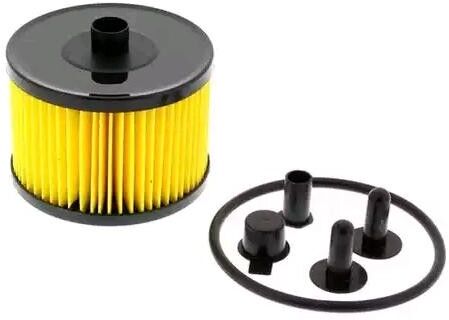
Champion CFF100251 Fuel filterFilter type: Filter Insert; Height: 78; Outer Diameter [mm]: 82; Inner Diameter [mm]: 30; Container Type: Carton; Packaging length [cm]: 8,5; Packaging width [cm]: 8,5; Packaging height [cm]: 8,2; Manufacturer Restriction: Bosch; Construction Year from: 04/20036,29 £*Shipping: 8,45 £Secure redirect to the provider
-
Champion CFF100401 Fuel filterHeight: 75; Outer Diameter [mm]: 92; Inner Diameter [mm]: 15; Inner Diameter 1 [mm]: 17; Container Type: Carton; Packaging length [cm]: 9,7; Packaging width [cm]: 9,7; Packaging height [cm]: 9,7; Construction Year to: 02/2010, 04/20106,29 £*Shipping: 8,45 £Secure redirect to the provider


-
What is the relationship between efficiency and fuel consumption in physics?
In physics, the relationship between efficiency and fuel consumption is often described by the concept of energy conversion. Efficiency is a measure of how well a system converts input energy into useful output energy, while fuel consumption is a measure of the amount of fuel needed to produce a certain amount of energy. Generally, higher efficiency means lower fuel consumption, as a more efficient system requires less fuel to produce the same amount of energy output. This relationship is important in designing and optimizing energy systems, such as engines and power plants, to minimize fuel consumption and maximize energy efficiency. **
-
How do stricter environmental regulations requiring higher fuel efficiency affect the automotive industry?
Stricter environmental regulations requiring higher fuel efficiency in the automotive industry can have both positive and negative impacts. On one hand, it can drive innovation and the development of more fuel-efficient technologies, leading to cleaner vehicles and reduced emissions. However, it can also increase production costs for automakers, potentially leading to higher prices for consumers. Additionally, it may require significant investments in research and development to meet these regulations, which could impact the profitability of some companies. **
-
What happens if you fuel up with dirty fuel?
If you fuel up with dirty fuel, it can cause damage to your vehicle's engine and fuel system. Dirty fuel can contain contaminants such as dirt, water, and other impurities that can clog fuel filters, injectors, and other components. This can lead to decreased engine performance, reduced fuel efficiency, and potentially costly repairs. It's important to always use clean, high-quality fuel to ensure the proper functioning and longevity of your vehicle. **
-
Which fuel pump?
The choice of fuel pump depends on the specific requirements of the vehicle and its engine. Factors to consider include the engine's fuel consumption, the vehicle's fuel system pressure requirements, and the compatibility with the vehicle's electrical system. It's important to consult with a professional mechanic or refer to the vehicle's specifications to determine the most suitable fuel pump for the specific application. **


How can you save fuel by choosing fuel-efficient routes?
You can save fuel by choosing fuel-efficient routes because these routes are often designed to minimize stops and idling, which can waste fuel. Fuel-efficient routes may also avoid traffic congestion and hills, which can increase fuel consumption. By selecting the most direct and smooth routes, you can reduce the overall distance traveled and the amount of fuel needed to reach your destination. Additionally, using GPS navigation systems or apps that provide real-time traffic updates can help you choose the most efficient route based on current road conditions. **
What is defective, the fuel pump or the fuel nozzle?
It is not clear which component is defective based on the information provided. The symptoms described could be indicative of issues with either the fuel pump or the fuel nozzle. It would be best to have a professional mechanic diagnose the problem to determine the exact cause of the issue. They can perform tests and inspections to identify the faulty component and make the necessary repairs. **
Top-Angebote
Products related to Fuel:
-
KOLBENSCHMIDT 50014136 Fuel filterFilter type: Filter Insert; Outer Diameter 1 [mm]: 68; Inner Diameter 1 [mm]: 24; Height: 103; Construction Year to: 05/2011, 04/2007; TecDoc PC Type Number: 25871, 16740, 16866, 16651, 16655, 16867, 16868, 16650, 16739, 16654, 16673, 16835, 16760, 16764, 16663, 33071, 17841, 18206, 58735, 132792, 17575, 17696, 18367, 18558, 19145, 19147, 22560, 16752, 16643, 16748, 16754, 16644, 16750, 16645, 16749, 16753, 16756, 16757, 16758, 37793, 16264, 16265, 16266, 16267, 16268, 16665, 16762, 16763, 16766, 27990, 54933, 18244, 18245, 18300, 9246, 17941, 17942, 17945, 17946, 18072, 18080, 18301, 18689, 18951, 9244, 18121, 18130, 18131, 18133, 18164, 19135, 19426, 26668, 32158, 32816, 19131, 17934, 17938, 17939, 17940, 18691, 19117, 19118, 19464, 9247, 18258, 18570, 19371, 100038, 18254, 18569, 11746, 17701, 19203, 17842, 18029, 18235, 18236, 17452, 18251, 18250, 11390, 18126, 18127, 18826, 27488, 133247, 18903, 18904, 122663, 19113, 19115, 19331, 30934, 9248, 19114, 19129, 32154, 32811, 18128, 18129, 18132, 18163, 19132, 19133, 19310, 19425, 32814, 132754, 18690, 19119, 19120, 19284, 19285, 19286, 19287, 19986, 19594, 19595, 23427, 19290, 19495, 59245, 127446, 19913, 19984, 19999, 26664, 27546, 27597, 28030, 12194, 1498, 23177, 27951, 30755, 32826, 19937, 31616, 12026, 19978, 19981, 19975, 12028, 19976, 19979, 59928, 19982, 20033, 20034, 23357, 26638, 19312, 19313, 23831, 25504, 19516, 22740, 19548, 19551, 30762, 27530, 28149, 57, 28122, 31699, 32074, 32076, 33353, 9310, 110002, 17640, 18092, 27952, 16765, 16761, 16664, 19868, 19871, 19874, 19869, 19872, 19875, 19578, 19581, 19584, 19579, 19582, 19585, 19580, 19583, 19587, 33788, 34964, 9627, 1799, 1800, 33592, 127445, 10205, 30326, 30473, 9130, 9129, 9126, 57446, 57448, 19342, 19343, 27988, 12052, 24470, 24471, 28405, 8519, 24468, 24469, 33666, 19870, 19873, 19876, 28123, 32207, 110040, 110041, 20735, 30795, 12062, 12063, 12064, 11109, 11114, 11117, 11107, 11112, 11115, 12057, 12058, 12060, 12065, 12066, 12067, 11108, 11113, 11116, 12068, 12069, 12070, 33787, 33790, 8513, 23778, 19974, 19977, 19980, 16653, 16738, 16649, 51300, 57844; Construction Year from: 01/2005; TecDoc Engine Number: 24468, 17456, 18989, 21855, 20084, 17477, 21017; Vehicle Identification Number (VIN) to: 64138771, 640889606,99 £*Shipping: 8,45 £Secure redirect to the provider
-
Champion CFF100132 Fuel filterFilter type: Filter Insert; Height: 110; Outer Diameter [mm]: 84; Inner Diameter 1 [mm]: 19; Inner Diameter 2 [mm]: 17; Container Type: Carton; Packaging length [cm]: 9; Packaging width [cm]: 9; Packaging height [cm]: 12,5; Manufacturer Restriction: CAV (Lucas), CAV/Delphi CAV796, Bosch, CAV/Delphi; Fuel Mixture Formation: Petrol Injection; Construction Year to: 06/1992, 04/1992, 11/1995, 12/1995; Construction Year from: 07/1992; TecDoc Engine Number: 711; Engine Code: XUD11BTE, XUD11ATE; Vehicle Identification Number (VIN) to: 073025,99 £*Shipping: 8,45 £Secure redirect to the provider
-
Champion CFF100201 Fuel filterFilter type: In-Line Filter; Height: 140; Outer Diameter [mm]: 59; Inlet Diameter [mm]: 9,3; Outlet Diameter [mm]: 8; Container Type: Carton; Packaging length [cm]: 6,4; Packaging width [cm]: 6,4; Packaging height [cm]: 17,8; Construction Year to: 04/1977, 06/1996, 06/1995, 06/1994, 09/1997, 09/1995, 10/1996; Fuel Mixture Formation: Petrol Injection; Engine Code: KDY; Construction Year from: 09/1991, 05/1992, 05/1987, 08/1989, 08/1996, 10/1990; Manufacturer Restriction: Weber; TecDoc Engine Number: 1016, 954, 6816; Injection System: Single Point Injection (SPI); Vehicle Identification Number (VIN) to: 6K_W_516000(CLASSIC), 6N_V_300000, 433998, 4339918, V300.000, 6K_V_250000, W516000, 6K_W_516000, 6N_W_000000, 6K_W_516000(Classic; Vehicle Identification Number (VIN) from: 43399195,59 £*Shipping: 8,45 £Secure redirect to the provider
-
Champion CFF100225 Fuel filterFilter type: In-Line Filter; Height: 162; Outer Diameter [mm]: 60; Inlet Diameter [mm]: 11; Outlet Diameter [mm]: 7,8; Container Type: Carton; Packaging length [cm]: 6,2; Packaging width [cm]: 6,2; Packaging height [cm]: 17,3; Construction Year from: 10/1997, 10/1995, 08/1995, 10/2005, 09/2005; Vehicle Identification Number (VIN) from: 15408416, 2010618, 6K_W_516001(CLASSIC), 6N_W_000001, W000.001, 6K_W_000001, W516001, 53510416, 6K_W_516001, 6K_W_516001(Classic; Construction Year to: 02/1999, 04/1996, 05/2002, 09/2005, 05/2006; Fuel Supply: for vehicles with fuel return system; TecDoc Engine Number: 18155, 16872, 17406, 17081, 17069; Engine Code: AXW; Supplementary Article / Supplementary Info Info 2: without pressure regulator5,59 £*Shipping: 8,45 £Secure redirect to the provider
-
What is the fuel efficiency class of a tire?
The fuel efficiency class of a tire is a rating that indicates how well the tire can contribute to reducing fuel consumption. It is measured on a scale from A (most efficient) to G (least efficient), with A being the most fuel-efficient class. Tires with a higher fuel efficiency class can help improve a vehicle's fuel economy and reduce carbon emissions. It is an important factor to consider when choosing tires for your vehicle. **
-
What is the fuel efficiency of a gasoline engine?
The fuel efficiency of a gasoline engine is typically measured in miles per gallon (MPG) or liters per 100 kilometers (L/100km). This measures how far a vehicle can travel on a certain amount of fuel. The fuel efficiency of a gasoline engine can vary depending on factors such as the vehicle's make and model, driving conditions, and maintenance. Generally, newer gasoline engines are designed to be more fuel efficient than older models due to advancements in technology and engineering. **
-
What is the relationship between efficiency and fuel consumption in physics?
In physics, the relationship between efficiency and fuel consumption is often described by the concept of energy conversion. Efficiency is a measure of how well a system converts input energy into useful output energy, while fuel consumption is a measure of the amount of fuel needed to produce a certain amount of energy. Generally, higher efficiency means lower fuel consumption, as a more efficient system requires less fuel to produce the same amount of energy output. This relationship is important in designing and optimizing energy systems, such as engines and power plants, to minimize fuel consumption and maximize energy efficiency. **
-
How do stricter environmental regulations requiring higher fuel efficiency affect the automotive industry?
Stricter environmental regulations requiring higher fuel efficiency in the automotive industry can have both positive and negative impacts. On one hand, it can drive innovation and the development of more fuel-efficient technologies, leading to cleaner vehicles and reduced emissions. However, it can also increase production costs for automakers, potentially leading to higher prices for consumers. Additionally, it may require significant investments in research and development to meet these regulations, which could impact the profitability of some companies. **
Similar search terms for Fuel
-
Champion CFF100251 Fuel filterFilter type: Filter Insert; Height: 78; Outer Diameter [mm]: 82; Inner Diameter [mm]: 30; Container Type: Carton; Packaging length [cm]: 8,5; Packaging width [cm]: 8,5; Packaging height [cm]: 8,2; Manufacturer Restriction: Bosch; Construction Year from: 04/20036,29 £*Shipping: 8,45 £Secure redirect to the provider
-
Champion CFF100401 Fuel filterHeight: 75; Outer Diameter [mm]: 92; Inner Diameter [mm]: 15; Inner Diameter 1 [mm]: 17; Container Type: Carton; Packaging length [cm]: 9,7; Packaging width [cm]: 9,7; Packaging height [cm]: 9,7; Construction Year to: 02/2010, 04/20106,29 £*Shipping: 8,45 £Secure redirect to the provider
-
Champion CFF100402 Fuel filterHeight: 65; Outer Diameter [mm]: 77; Inner Diameter [mm]: 14; Container Type: Carton; Packaging length [cm]: 9,2; Packaging width [cm]: 8,4; Packaging height [cm]: 8,1; Number of seal rings: 1; Manufacturer Restriction: Siemens; Construction Year from: 05/20016,99 £*Shipping: 8,45 £Secure redirect to the provider
-
Champion CFF100420 Fuel filterFilter type: In-Line Filter; Height: 157; Outer Diameter [mm]: 60; Inlet Diameter [mm]: 8; Outlet Diameter [mm]: 8; Container Type: Carton; Packaging length [cm]: 6,2; Packaging width [cm]: 6,2; Packaging height [cm]: 16,77,59 £*Shipping: 8,45 £Secure redirect to the provider
-
What happens if you fuel up with dirty fuel?
If you fuel up with dirty fuel, it can cause damage to your vehicle's engine and fuel system. Dirty fuel can contain contaminants such as dirt, water, and other impurities that can clog fuel filters, injectors, and other components. This can lead to decreased engine performance, reduced fuel efficiency, and potentially costly repairs. It's important to always use clean, high-quality fuel to ensure the proper functioning and longevity of your vehicle. **
-
Which fuel pump?
The choice of fuel pump depends on the specific requirements of the vehicle and its engine. Factors to consider include the engine's fuel consumption, the vehicle's fuel system pressure requirements, and the compatibility with the vehicle's electrical system. It's important to consult with a professional mechanic or refer to the vehicle's specifications to determine the most suitable fuel pump for the specific application. **
-
How can you save fuel by choosing fuel-efficient routes?
You can save fuel by choosing fuel-efficient routes because these routes are often designed to minimize stops and idling, which can waste fuel. Fuel-efficient routes may also avoid traffic congestion and hills, which can increase fuel consumption. By selecting the most direct and smooth routes, you can reduce the overall distance traveled and the amount of fuel needed to reach your destination. Additionally, using GPS navigation systems or apps that provide real-time traffic updates can help you choose the most efficient route based on current road conditions. **
-
What is defective, the fuel pump or the fuel nozzle?
It is not clear which component is defective based on the information provided. The symptoms described could be indicative of issues with either the fuel pump or the fuel nozzle. It would be best to have a professional mechanic diagnose the problem to determine the exact cause of the issue. They can perform tests and inspections to identify the faulty component and make the necessary repairs. **
* All prices are inclusive of VAT and, if applicable, plus shipping costs. The offer information is based on the details provided by the respective shop and is updated through automated processes. Real-time updates do not occur, so deviations can occur in individual cases. ** Note: Parts of this content were created by AI.